

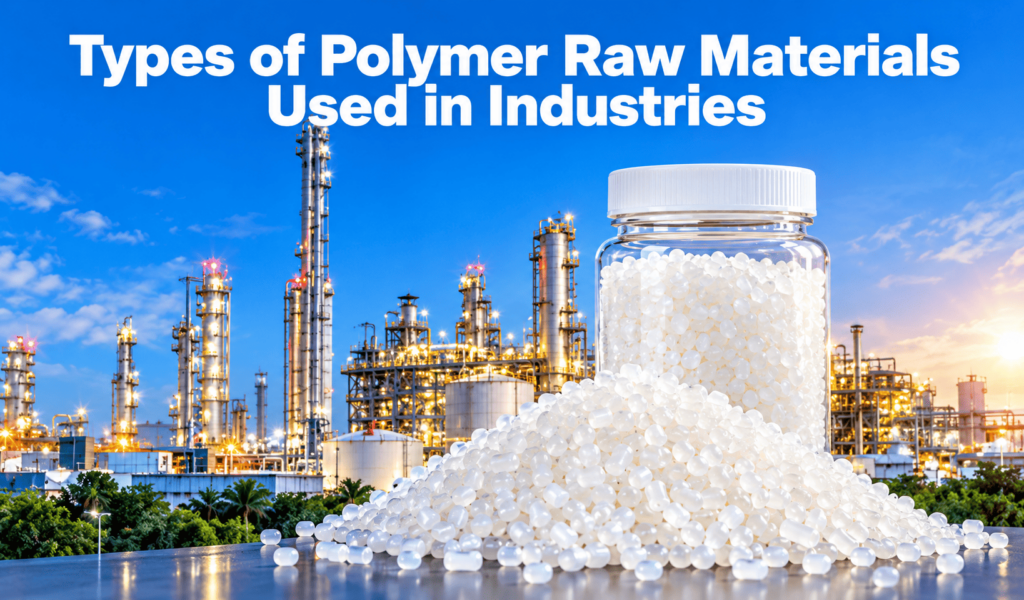
Polymers are among the most extensively used materials in modern industries because of their versatility, sustainability, and cost-effective methods. From packaging and automotive key parts to construction materials, electronic appliances, medical products, and consumer goods, polymers play a vital role in manufacturing. The various types of polymers depend on the type and quality of raw material used during production. Polymer raw materials can vary on the basis of chemical composition and structure.
What Are Polymer Raw Materials?
Polymer raw materials are substances used to manufacture polymer-based products through various methods like compression molding, thermoforming, injection molding, extrusion, blow molding, and rotational molding. These materials may be supplied in the form of pellets, granules, powders, liquids, or resins, which depends on the basis of chemical composition and manufacturing methods. Common polymer raw materials include thermoplastics, thermosetting polymers, elastomers, and specialty polymer resins.
Different Types of Polymers Used in Industries
There are several polymer raw materials that are used in industries and help in manufacturing.
Thermoplastics:
Thermoplastics are one of the most extensively used polymer raw materials in the manufacturing industry. These polymers melt when heated and become hard when cooled, permitting them to be continuously processed under these conditions. This feature makes thermoplastics highly suitable for large-scale manufacturing and recycling applications. Common thermoplastic raw materials include polyethylene, polypropylene, polyvinyl chloride, polystyrene, polyethylene terephthalate, acrylonitrile butadiene styrene, polycarbonate, and polyamide. Thermoplastics are used in packaging, household products, and consumer goods.
Polyethylene (PE):
Polyethylene is one of the best polymers used globally. Having exceptional characteristics, being lightweight, moisture-retentive, sustainable, and durable, polyethylene is cost-effective. Different grades of polyethylene are available, including low-density polyethylene (LDPE), linear low-density polyethylene (LLDPE), high-density polyethylene (HDPE), and ultra-high-molecular-weight polyethylene (UHMWPE). LDPE and LLDPE are mainly used for films, convenient packaging bags, and agricultural use.
Polypropylene (PP):
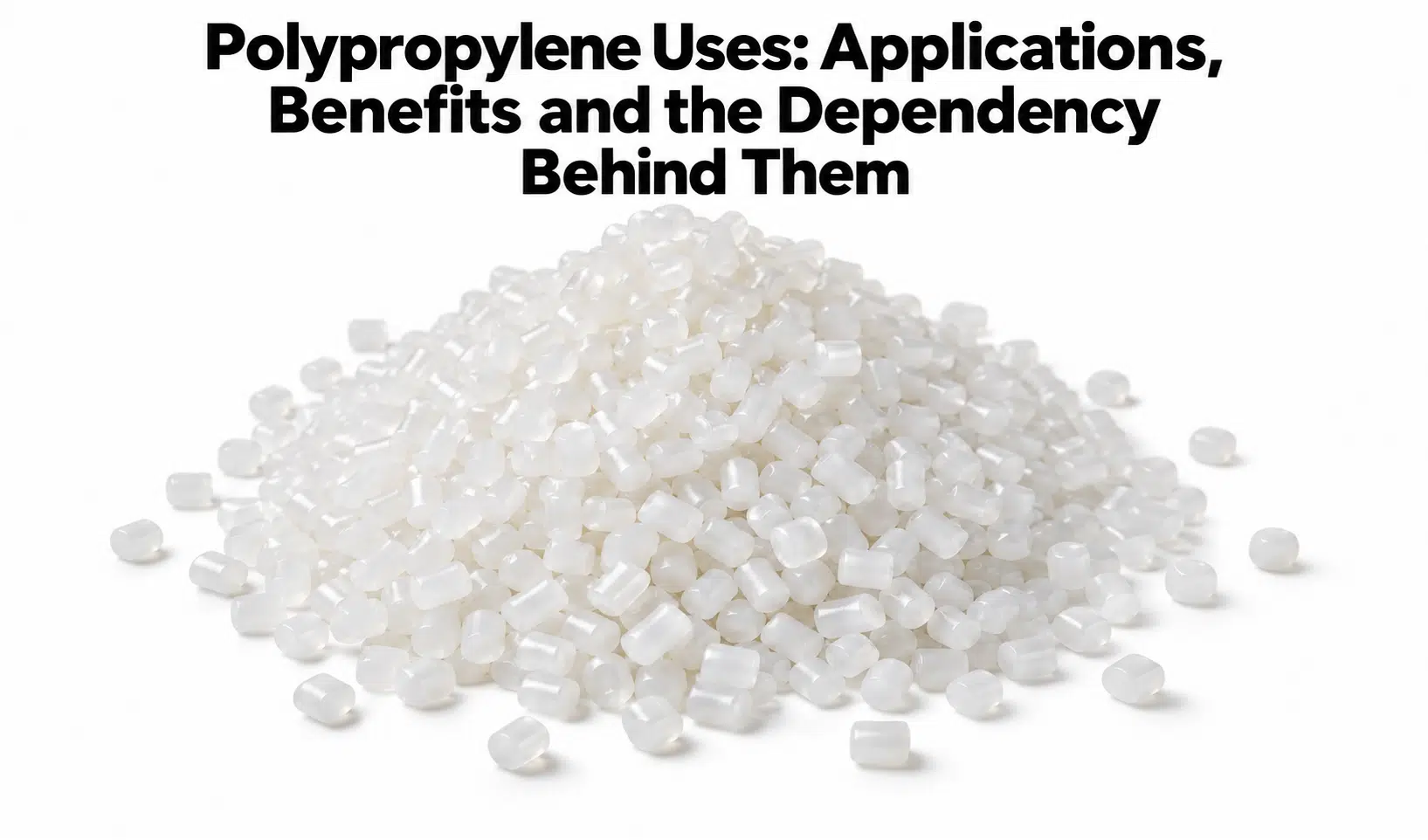
Polypropylene is another important polymer raw material used across several industries. It provides several qualities like chemical resistance, moisture resistance, and low density. Polypropylene can easily bear repeated bending, which makes them useful for products such as living hinges, storage containers, automation key parts, medical use, and packaging. It is also extensively used in fibres and household products, ensuring durability and cost-effectiveness.
Polyvinyl Chloride (PVC):
Polyvinyl chloride, mainly known as PVC, is a dynamic polymer raw material available in both rigid and flexible forms. While understanding the uses of polymers, rigid PVC is mainly used in pipes, cables, window panels, flooring materials, and flexible sheets. PVC provides good chemical resistance, durability, and weather resistance. One major benefit is that it can be used as a plasticizer, which enables manufacturers and producers to develop materials with hardness and more elasticity.
Polystyrene (PS):
Polystyrene is a lightweight polymer material mainly used in packaging, thermoforming, disposable products, and consumer use. It can be produced in several forms, including general-purpose polystyrene and expanded polystyrene. Expanded polystyrene is known for its insulation properties and is lightweight, which makes it useful for packaging. Polystyrene can also be modified to improve impact resistance and other performance characteristics, making it suitable for a variety of molded products.
Polyethylene Terephthalate (PET):
Polyethylene terephthalate, or PET, is a significant polyester-based polymer raw material that is used extensively in textile applications. Known for its strength, durability, dimensional stability, clarity, and good barrier properties, the raw material can be one of the best under the classification of polymers. It is mainly used to manufacture beverage bottles, food containers, packaging films, and synthetic fibers. PET is also widely associated with recycling because used PET products can be collected and processed into new materials.
Engineering Plastics:
Engineering plastics are most common among the polymers, where raw materials are developed for applications that require a high degree of chemical resistance in comparison to traditional plastics. Common engineering polymers consist of polycarbonate, polyamide, polyoxymethylene, polybutylene terephthalate, and acrylonitrile butadiene styrene. These materials are commonly used in automotive parts, electrical and electronic components, machinery, appliances, and industrial equipment.
Thermosetting Polymers:
Thermosetting polymers are another vital group of polymer raw materials. Unlike thermoplastics, thermosetting materials go through a different chemical reaction. Once cured, they generally cannot be melted and reshaped through conventional heating. This provides excellent dimensional stability, heat resistance, and chemical resistance. Common thermosetting materials include epoxy resins, phenolic resins, melamine formaldehyde, and unsaturated polyester resins. They are commonly used for lamination, construction, and automation.
What are Polymers Used For?
Choosing the correct polymer raw material is important. Manufacturers mainly consider mechanical strength, impact resistance, elasticity, temperature tolerance, moisture retention, and cost-effectiveness. Sustainability and recyclability are also becoming a priority. The manufacturing process itself can influence material selection, as a polymer suitable for injection molding may have different requirements from one intended for film extrusion or blow molding.
Classification of Polymers
Polymers can be classified on the basis of their source, structure, mode of polymerization, and intermolecular forces. The classification is based on the source, such as cellulose, proteins, semi-synthetic polymers such as cellulose acetate, and synthetic polymers such as polyethene, PVC, and nylon. Based on framework, polymers may be linear, branched, or multilinked. They can also be classified as thermoplastics, thermosetting polymers, and elastomers according to their behaviour on heating and mechanical properties.
Applications of Polymers
Polymers are extensively used in day-to-day life as well as in various industries because of their light weight, durability, chemical resistance, and ease of processing.
- Polyethylene and PVC are used for packaging materials, pipes, insulation, and household products.
- Nylon and polyester are useful in textiles, ropes, and carpets.
- Rubber is used for tyres, belts, and footwear.
Polymers are also vital for medicinal products like syringes, drug delivery, and lightweight components.
Conclusion
The various types of polymers in the industry rely on a wide range of raw materials to meet the manufacturing needs. Thermoplastics such as polyethylene, polypropylene, PVC, polystyrene, and PET remain among the most widely used materials because of their versatility and efficient processing characteristics. Engineering plastics provide enhanced performance for demanding applications, while thermosetting polymers and elastomers provide heat resistance, moisture resistance, and durability.



 no updates