

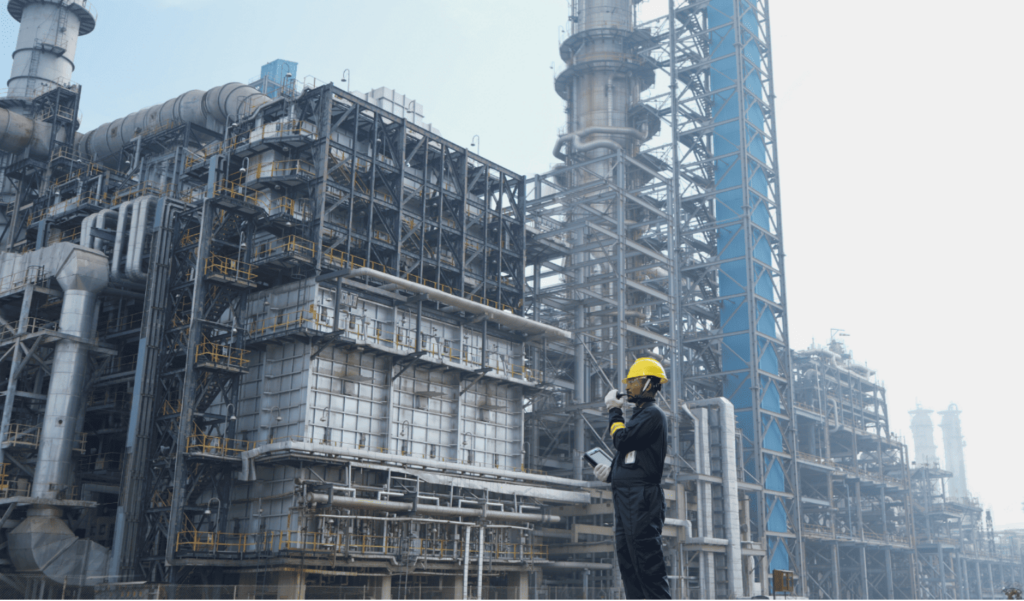
Introduction: Why Process Safety Management Matters
Process safety management is a structured risk management framework designed to identify, assess, and mitigate risks arising from industrial operations. This includes hazardous chemicals, energy, and operating situations. Industry trends indicate that the process safety management software market is projected to reach USD 72.65 billion by 2031. Its ultimate objective is to prevent major risks like explosions, fires, and toxic releases.
Personal safety protects individuals from occupational injuries. Process safety management prevents catastrophic events such as fires, explosions and toxic releases.
Among major industries, Petrochemical facilities operate in inherently high-risk environments. It Oil, Gas & Petrochemical industries handle flammable, toxic, and reactive substances under high pressure and temperature. As a result, even minor failures can escalate rapidly if not effectively managed. This necessitates a proactive and systems based approach to risk management. Effective process safety management strengthens decision-making through systematic risk awareness.
Understanding Process Safety Management (PSM)
The following section outlines process safety management and its core objectives.
What is Process Safety Management?
- PSM is a well-defined and methodical approach used to identify, evaluate and control process related hazards associated with hazardous chemicals and energy sources that are linked to chemical processes and their operations.
- Unlike traditional safety programs, the ultimate motive of PSM is to prevent major incidents like fires, explosions, and large chemical releases instead of individual injuries.
Core Objectives of PSM
- PSM is designed to reduce high-risk scenarios that can lead to serious process-related accidents. As a result, PSM is a central element of safety frameworks in the Oil Gas & Petrochemical industry.
- Efficient PSM can safeguard the workers while maintaining your plant infrastructure. It also prevents the surrounding ecosystems and nearby communities from large-scale dangers.
- By controlling process risks, PSM can help your facilities manage stable operations while fulfilling regulatory needs. This also combines engineering principles, operational controls, and management techniques for seamless risk management.
Why Process Safety is Critical in the Petrochemical Industry
Inadequate process safety management increases operational and systemic risk in petrochemical facilities.
High-Risk Nature of Petrochemical Operations
- The petrochemical industry continuously deals with extremely flammable and chemically reactive materials. Operational process deviations can lead to hazardous releases or loss-of-containment events. This is why process safety in petrochemical industry operations has become essential.
- Petrochemical plants generally operate through interconnected systems. So, a minor equipment failure, control error, or procedural deviations become a major incident if the process risks are not managed properly.
Lessons from Major Industry Incidents
- Several major petrochemical incidents have resulted from inadequate hazard identification, poor maintenance, or ineffective safety systems, rather than individual human error. These incidents highlight the consequences of insufficient process safety controls.
- Efficient process safety management makes sure to learn from prior incidents. So, the ultimate focus remains on adopting better procedures and designs. This can keep your safety performance intact.
Key Elements of Effective Process Safety Management
Here are some major elements that help process safety management become more goal-oriented.
Hazard Identification & Risk Assessment
Process Hazard Analysis enables a systematic assessment of risks within chemical processes.Further, you can evaluate their consequences before they escalate into a massive incident.Similarly, structured techniques such as HAZOP, ‘What If’ and Layer of Protection Analysis (LOPA) analysis are used to identify initiating events safeguards and consequence pathways.
Engineering & System Integrity
With engineering controls, you can ensure that the facilities are designed constructed and maintained to ensure safe handling of hazardous materials under all types of operating conditions. Moreover, regular checkups, preventive maintenance, and change management are necessary to maintain your system integrity. This approach supports consistent safety performance in the oil and gas industry.
Operating Procedures & Training
The operating procedures must be accurate, update and aligned with actual plant configurations. This ensures they are clear, practical, and consistently maintained. Other than this, input from experienced operators can enhance procedure quality and help detect operational challenges. Such risks might not be visible at the design level.
Incident Investigation & Learning
Detailed investigations and systematic analysis help in detecting the underlying system weaknesses and organisational factors. Such analysis shows that the incidents have not risen due to complete human error.
The Human Factor: Where Traditional PSM Often Falls Short
Even in well-designed systems, people are prone to do mistakes. Traditional Process Safety Management programs might underestimate this reality and heavily rely on procedural compliance.
Operator behaviour is influenced by factors such as uncertainty, workload pressure, poor interface design, and organisational priorities. So, when systems become challenging to use or have any unrealistic practices, the chances of errors usually increase.
Effective process safety management requires shifting focus from individual blame to understanding system vulnerabilities. This is how the design framework becomes more robust while adopting the advanced features of HML PLUS.
HMEL PLUS: Strengthening Process Safety through Culture & Human Performance
Let us learn more about HMEL PLUS and how it keeps process safety in the petrochemical industry intact.
What is HMEL PLUS?
- HMEL PLUS or People Leading Unified Safety represents a modern approach to safety that builds on traditional process safety management. It addresses cultural and human performance dimensions extensively.
- HMEL PLUS combines the Incident and Injury free philosophy with Human Performance principles. This framework is designed to reduce human error while strengthening system resilience.
How HMEL PLUS Supports Process Safety Management
- HMEL PLUS includes safety considerations for the integrity of the system along with its engineering design. So, it directly influences the decision-making abilities.
- The framework identifies that errors are normal and predictable. It focuses on designing processes. Further, it prevents them from escalating into serious risks, which is essential for safety in the Oil, Gas & Petrochemical industry.
- HMEL PLUS encourages open reporting and learning from minor mistakes. Further, it supports a safe environment where concerns can be raised without any fear.
From Compliance to Commitment
- HMEL PLUS extends beyond a compliance checklist. It is a mindset and a leadership approach that shapes how people think and act about safety.
- Through shared language, structured conversations, and practical tools, HMEL PLUS assists your team in identifying and addressing hidden risks before they turn into safety failures.
HMEL PLUS in Action: A Holistic Approach to Safety
Understand how HMEL PLUS can root safety in the Oil, Gas & Petrochemical industry.
Process Safety beyond Operations
HMEL PLUS applies safety thinking across multiple areas to ensure the risks are handled effectively.
Process Safety –
It boosts engineering controls and the integrity of the systems to safeguard the industry from major failures.
Operational Safety –
It prioritises best practices, safe habits, & decision-making to enhance Oil, Gas & Petrochemical operations.
Road & Community Safety
It extends its safety responsibilities beyond plant boundaries to keep the surrounding communities safe and secure.
Psychological Safety
Encourages open communication and helps learning from mistakes without any fear.
This approach encourages a notion of safety that is not limited to the workplace, but it shapes how people think and act every day.
Leadership’s Role in Strengthening Process Safety
Leadership behaviour strongly shapes the safety outcomes through daily actions, decisions, and priorities. It mainly influences the role of Process Safety Management.
You can enhance your reporting and learning protocols with predictable responses while helping your industry find potential risks in the early phase.
HMEL PLUS always combines a culture that balances accountability while focusing on the improvement of the systems.
Building a Sustainable Process Safety Culture
A sustainable process safety culture is created through consistent leadership commitment and continuous learning. So, integrating process safety management ensures sustain risk awareness and operational reliability while keeping your operations hazard-free.
Conclusion
Adherence to established process safety principles is critical in high-risk Oil, Gas & Petrochemical environments. The operations majorly depend on human-centred thinking, strong systems, and leadership accountability. Combining PSM with HMEL PLUS supports more resilient and reliable operations.



 no updates