

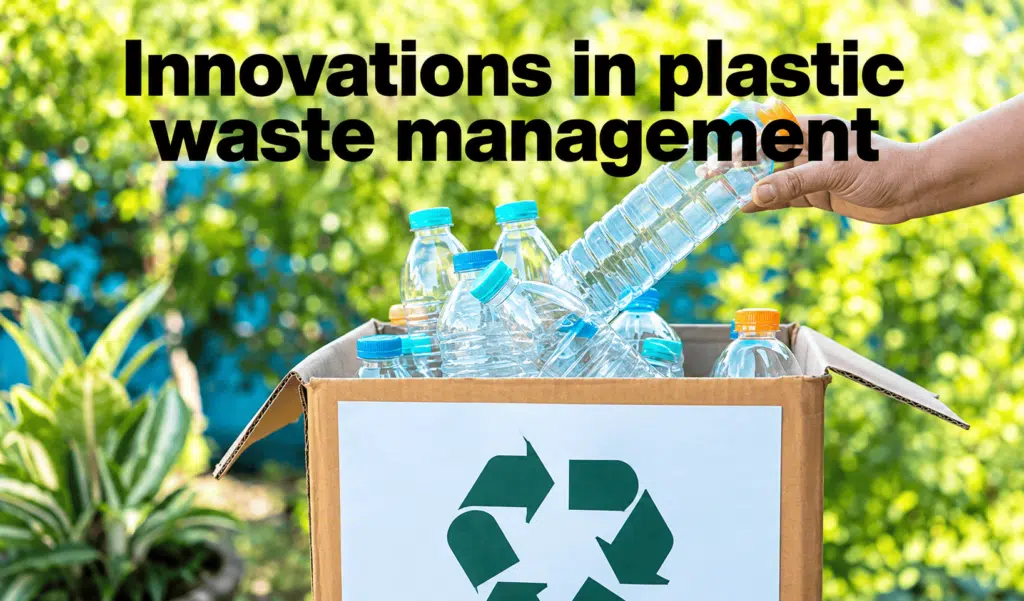
The plastic industry has transformed completely. Plastic has become an important part across the globe and is used for packaging. Plastic has become an essential material across packaging, construction, electronics, healthcare, and consumer goods. Its sustainability, lightweight nature, and versatility have helped in industrial uplift. The rampant increase in plastic waste has led to serious economic and social upheavals.
This situation is helping businesses, governments, and scientists to invest in basic inventions of plastic management and advanced recycling technologies. The focus is gradually moving from a traditional approach to a circular economy in which materials are designed for longer use.
Innovations in Plastic Management
Modern plastic management is increasingly based on prevention, reuse, and recycling. One important innovation in plastic waste management is the formation of smart systems that make use of optical sensors, AI, and advanced tools to identify polymer and toxic materials. Better sorting can improve the quality of recovered plastic and make recycling operations more commercially attractive.
Another major development for plastic is recyclability. Manufacturers are increasingly valuing the lifespan of a product before it reaches the market. Simplifying packaging structures, lowering the use of redundant materials, avoiding problematic additives, and using compatible polymers can make products easier to recycle. Digital tracking and product identification systems help recyclers understand the composition of plastic waste and know its long-term uses.
Growth of Technology for Plastic Recycling and Innovations in Play
Growing technologies to manage plastic degradation are developing rapidly to address materials that conventional recycling cannot process efficiently. Mechanical recycling remains one of the most robust processes.
Advanced Mechanical Recycling:
Mechanical recycling is a traditional method of plastic treatment which indulge in new products and includes cutting, cleaning, and waste management. Advanced waste pre-treatment is also becoming increasingly important. Technologies that remove toxic pollutants, separate various layered materials, or improve the quality of waste before recycling. Recent technologies like AI sorting systems and near-infrared spectroscopy improve the chances for content separation.
Chemical Recycling:
Chemical recycling is another important area of the environmental effects of plastics and the way in which polymers can be segregated by melting plastics and some chemical recycling procedures. Growing advancements help to recycle waste streams. However, these technologies can involve increased energy, cost, and technical bottlenecks, which helps to understand the environmental impact. Costs and technical challenges mean their environmental and economic performance needs to be assessed carefully.
Biodegradable Plastics:
Development of biodegradable plastics, which are made of renewable resources such as polylactic acid, changes the plastic industry. These materials naturally decompose and lower the environmental effects of plastic pollution. Research continues to increase the shelf life and scalability of commercial applications.
Upcycling:
The method goes beyond traditional recycling and converts high-value plastic waste products. Plastic recycling includes examples in countries like India, which include plastic roads, 3D-printed materials, and sustainable fashion.
Microbial Decomposition:
Scientific facts in microbiology have detected plastic-degrading bacteria that can break down plastic. Enzymes like Pettez and Mutes can break down PET plastic at great speed.
The Future of Plastics and Industrial Growth
The future of plastics is unlikely to mean eliminating plastics. Instead, industrial growth is expected to depend increasingly on producing plastics more efficiently and managing them more responsibly. The effects of plastic on the environment persist to be significant in areas like electric vehicles. Plastics will continue to be important in sectors such as electric vehicles, renewable energy infrastructure, medical appliances, and durability.
The key change will be the transition towards circular plastics. Instead of relying predominantly on virgin fossil-based feedstocks, manufacturers can increasingly incorporate recycled materials into new products. This can reduce dependence on primary resources while creating new markets for recovered plastic.
Economic Benefits of Plastic Recycling
The economic advantages of plastic recycling stretch beyond reducing waste sent to landfill. Recycling can create better job opportunities across collection, sorting, processing, and digital development. As recycling infrastructure continues to grow, new businesses can grow around waste collection.
Recycling can also create value from waste-generated material. Recovered PET, polyethylene, polypropylene, and other polymers can become useful for new products. For manufacturers, its easy to use recycled products than to be fully dependent on raw materials. Technological innovation is an improvement for business recycling. Growing consumer awareness, green energy, government policies, and demand for recycled content can further strengthen the market.
Building a Circular Plastics Economy
The long-term solution requires more than recycling alone. Effective plastic management needs to incorporate a blend of ways that reduce redundant plastic use, encourage reuse, improve product design, and increase collection rates. UNEP recommends a broader systems transformation involving reducing problematic plastics, redesigning products and packaging, increasing reuse and strengthening recycling.
For industries, this involves boosting circularity in products and meeting market challenges on a constant basis. For governments, it means creating policies that encourage investment, improve waste collection and stimulate demand for recycled materials. For consumers, better segregation and responsible disposal can help ensure that recyclable materials actually reach recycling facilities.
Conclusion
Advancements in plastic management are turning plastic waste from an environmental challenge into a better industrial application. Sorting out plastic waste, engaging in chemical recycling, and better product design help to explore better opportunities and reduce the reliance on raw materials. At the same time, the economic benefits of plastic recycling include job creation, resource recovery, new business opportunities, and potentially more resilient manufacturing supply chains.
The future of plastics will therefore depend on how effectively industry can combine material innovation with responsible waste management. As investment, technology and policy develop together, plastics can continue supporting industrial growth while becoming part of a more circular and resource-efficient economy.





 no updates