

Hardly anyone has seen ethylene up close, yet almost everyone has touched something made from it. The carrier bag, the milk pouch, the bottle cap, the polyester shirt. So what is ethylene? It’s one of the most widely made organic chemicals in the world, and it works almost entirely behind the scenes, turning into other materials before it reaches you.
What Is Ethylene Gas?
Ethylene gas is a colourless, flammable gas at room temperature, and it’s the simplest member of a family of hydrocarbons called alkenes, which have a carbon-carbon double bond. That double bond is the whole point. It lets ethylene molecules link together into long chains, which is how plastics are built. Ethylene also happens to be a natural plant hormone, which is why it matters in fruit ripening as well as in factories.
Ethylene Chemical Formula and Properties of Ethylene
The ethylene chemical formula is C2H4: two carbon atoms and four hydrogen atoms. Among the properties of ethylene that matter most to industry are its reactivity, thanks to the double bond, and its flammability, which is why storage and handling are tightly controlled. It’s slightly sweet-smelling at low concentrations and, at high concentrations in enclosed spaces, it can displace oxygen.
How Is Ethylene Produced?
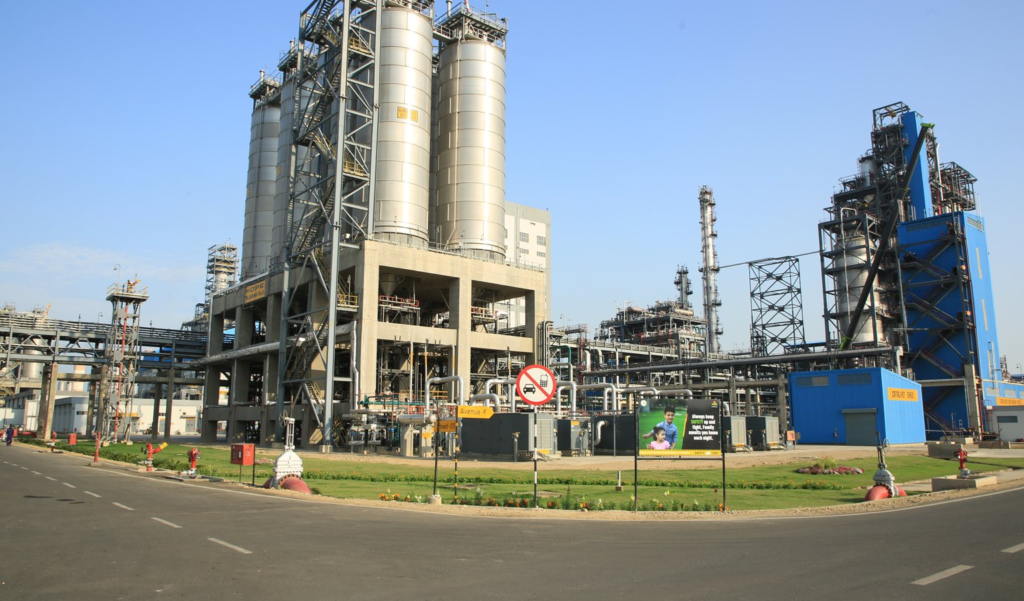
How is ethylene produced at scale? The standard route is steam cracking. Feedstocks such as ethane, propane or naphtha are heated to very high temperatures with steam, which breaks the larger molecules into smaller ones, ethylene among them. AZoM’s overview of plastic raw materials describes ethane and naphtha as the two main feeds. Some plants also crack refinery off-gas, which is why crackers are often built next to refineries.
Steam cracking uses a lot of energy, which is a cost factor for every producer.
Uses of Ethylene
The uses of ethylene fall into a few big groups. Industry data compiled by Alchempro suggests that more than 60% of global ethylene goes into polyethene, around 15% into ethylene dichloride for PVC, and the remainder into ethylene oxide, ethylbenzene and styrene. Ethylene oxide leads on to antifreeze and polyester, and styrene to packaging and insulation.
Ethylene gas uses outside plastics are smaller but real. Growers use controlled amounts to ripen bananas and other fruit on schedule.
Ethylene in the Petrochemical Industry
Within the petrochemical industry, ethylene is a building block, much like flour in a bakery. It sits among the olefins, along with propylene and butylene, and it feeds a chain of products that lead to packaging, pipes, fibres and coatings. Polypropylene, covered separately in our guide to its uses, comes from the propylene side of the same cracking process.
Ethylene is usually moved by pipeline or as a refrigerated liquid, and because it’s flammable, crackers run under strict safety rules. Building one is slow and expensive, so new capacity tends to arrive in large, infrequent steps rather than gradually.
That’s also why ethylene capacity is watched so closely. When a new cracker starts up, it changes prices for everything downstream.
Polyethene Manufacturers in India
India has a domestic base of polyethene manufacturers, including Reliance Industries, Indian Oil Corporation, GAIL, ONGC Petro Additions Limited and HMEL. Their crackers and polymer units supply packaging, pipe and film makers across the country.
The numbers show a market that’s growing but not yet self-sufficient. According to Alchempro, India’s ethylene capacity was about 8.8 million tonnes in 2024-25 and is projected to pass 9.4 million tonnes by 2026-28.
The Import Gap
Capacity at the ethylene stage hasn’t closed the gap further down the chain. CareEdge, cited by Indian Chemical News, estimates India’s petrochemical imports rose from about 6 million tonnes a year in FY19 to FY22 to roughly 9 million tonnes in FY23 and FY24. Around three-quarters of PVC demand and about a fifth of polyethene and polypropylene demand is met by imports.
Part of the pressure comes from outside. Global ethylene capacity grew from about 183 million tonnes in 2019 to about 231 million tonnes by the end of 2024, with China accounting for as much as two-thirds of the additions. When supply grows faster than demand, prices fall, and Indian producers feel it in their margins.
India’s appetite isn’t shrinking. S&P Global expects the country to overtake the United States as the second-largest consumer of polyethene by 2030, and a USD 37 billion petrochemical expansion is expected by the same date. Whether new capacity can win back market share from imports is the open question.
What to Remember
Ethylene is a simple molecule with an outsized job. It starts in a cracker, becomes polymers and chemicals, and ends up in nearly every shop and kitchen. For India, the interesting part is less the molecule than the chain after it, where demand keeps rising and imports still fill a sizeable share.

 no updates