

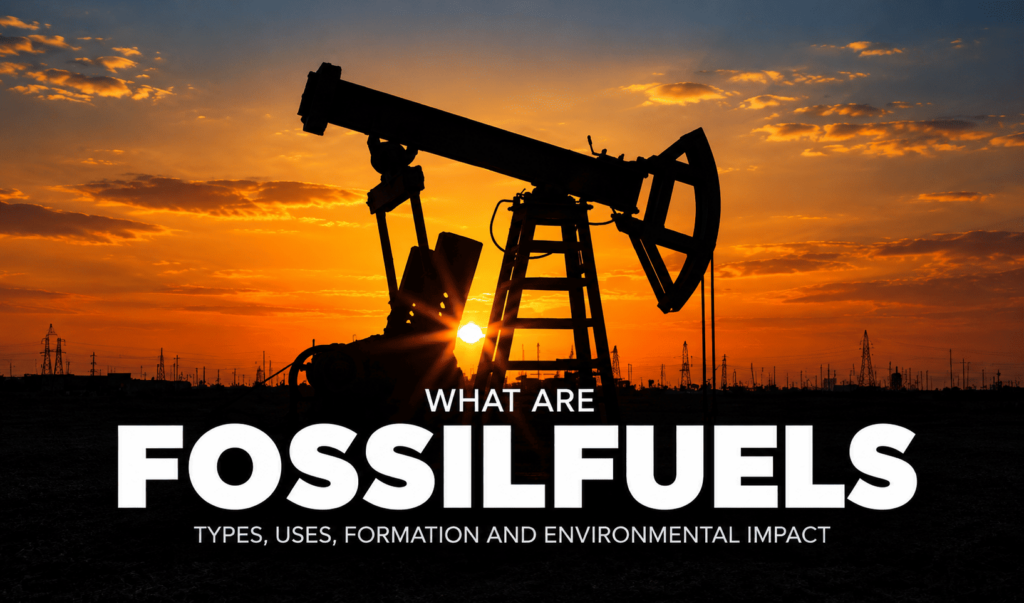
Fossil fuels are among the most widely used sources of energy and have played a significant role in industrial development, transportation, electricity generation, and economic progression. There is often a thought ringing in minds that asks what are fossil fuels and actually, they are energy resources formed from the dead remains of plants and animals. The three main types are coal, crude oil, and natural gas. Fossil fuels take tons of years to form and hence cannot be replenished easily within a lifetime.
What Are Fossil Fuels?
Fossil fuels are highly concentrated and energy-rich hydrocarbons stored beneath the surface of the earth. Their chemical energy is released when they are burnt, and they can be directly converted into electricity. Coal, oil, and natural gas can be distinguished on the basis of their physical attributes, chemical composition, and applications. There is always a question haunting minds whether fossil fuels can be made in the laboratory, and the answer is that they are only formed under the earth.
Fossil fuel combustion, converting chemical energy into heat, is the largest contributor to climate change and air pollution. Since fossil fuels are hydrocarbons formed by deeply buried dead organic material, they were subject to high temperature and pressure about millions of years ago and are a depletable, non-renewable energy source that cannot be weighed as per human timescales.
Types of Fossil Fuels
There are three main types of fossil fuels: coal, natural gas, and crude oil.
Coal:
The three major types of fossil fuels are coal, crude oil, and natural gas. Coal is a solid fossil fuel formed mainly from ancient vegetation that accumulated in swampy environments. Over continuous decades, pressure and heat have changed this organic substance into different varieties of coal. Coal is mainly used for electricity production and industrial heating. Over geological periods, pressure and heat transformed this organic material into different grades of coal. Coal is widely used for electricity generation, steel production, and industrial heating.
Crude Oil:
Crude oil is also known as petroleum. Crude oil is basically formed with the help of microscopic marine organisms and other organic matter buried beneath layers of sediment. Over the past years, heat and pressure transformed these remains into hydrocarbons. To understand whether petroleum is a fossil fuel, it’s important to gain clarity of its origin. Crude oil is extracted from reservoirs beneath the ground and used in refineries to produce gasoline and fuel.
Natural Gas:
It is a gaseous fossil fuel consisting primarily of methane, along with minor quantities of other hydrocarbons and gases. It has several uses and can be used for cooking, electricity generation, and industrial heating. It also produces fertilisers and chemicals.
Formation of Fossil Fuels
The formation of fossil fuels is a geological process that took place years ago. The inception of this process began when plants, microorganisms, and parts below the sea, like algae, were decomposed under the Earth’s surface. As extra layers of sediment accumulate, the organic material is subjected to elevated temperatures. Over extremely long periods, these conditions cause chemical and physical transformations that convert the raw material into coal, oil, or natural gas.
Uses of Fossil Fuels
The main benefits of fossil fuels are witnessed across the globe. Some of the advantages of using fossil fuels are:
- Used to boost industrial and technological advancements.
- The conservation of fossil fuels like coal is related to electricity generation.
- Oil is used to manufacture plastics and diesel.
- Natural gas is used to produce ammonia and fertilisers.
- Fossil fuels create an emergent need for a cleaner environment.
- Fossil fuels are used in lubricants, synthetic fibres and paints.
Environmental Impact of Fossil Fuels
The environmental impact of fossil fuels is one of the most pressing concerns. Burning coal, oil and natural gas releases carbon dioxide (CO₂), a major greenhouse gas that is responsible for a drastic effect on climate change and leads to air pollution. Fossil fuels help to create green energy by helping to generate more energy. Burning fossil fuels can be detrimental to health and lead to breathing problems and air contamination.
Environmental effects can occur throughout the fossil fuel lifecycle, not only during combustion. Mining coal can disturb land and ecosystems, while oil and gas extraction can adversely affect surrounding habitats. Drilling and transportation can also be hazardous as they can lead to leakage of methane. Preserving fossil fuels helps to maintain the safety of mankind since they do not cause combustion or lead to the fallout of greenhouse gases.
Conclusion
Fossil fuels have been fundamental to the modern era since they are an energy-rich resource that cannot be acquired by human endeavours. However, they are non-renewable in nature; they contribute extensively to the protection of the globe and help to prevent environmental hazards like global warming and ozone depletion. The ideology often hits the mind frame that what are fossil fuels and they are formed by dead plants and animals buried years ago under the Earth’s crust, which can be revitalised for energy boost, technological advancement, and even used in manures.





 no updates